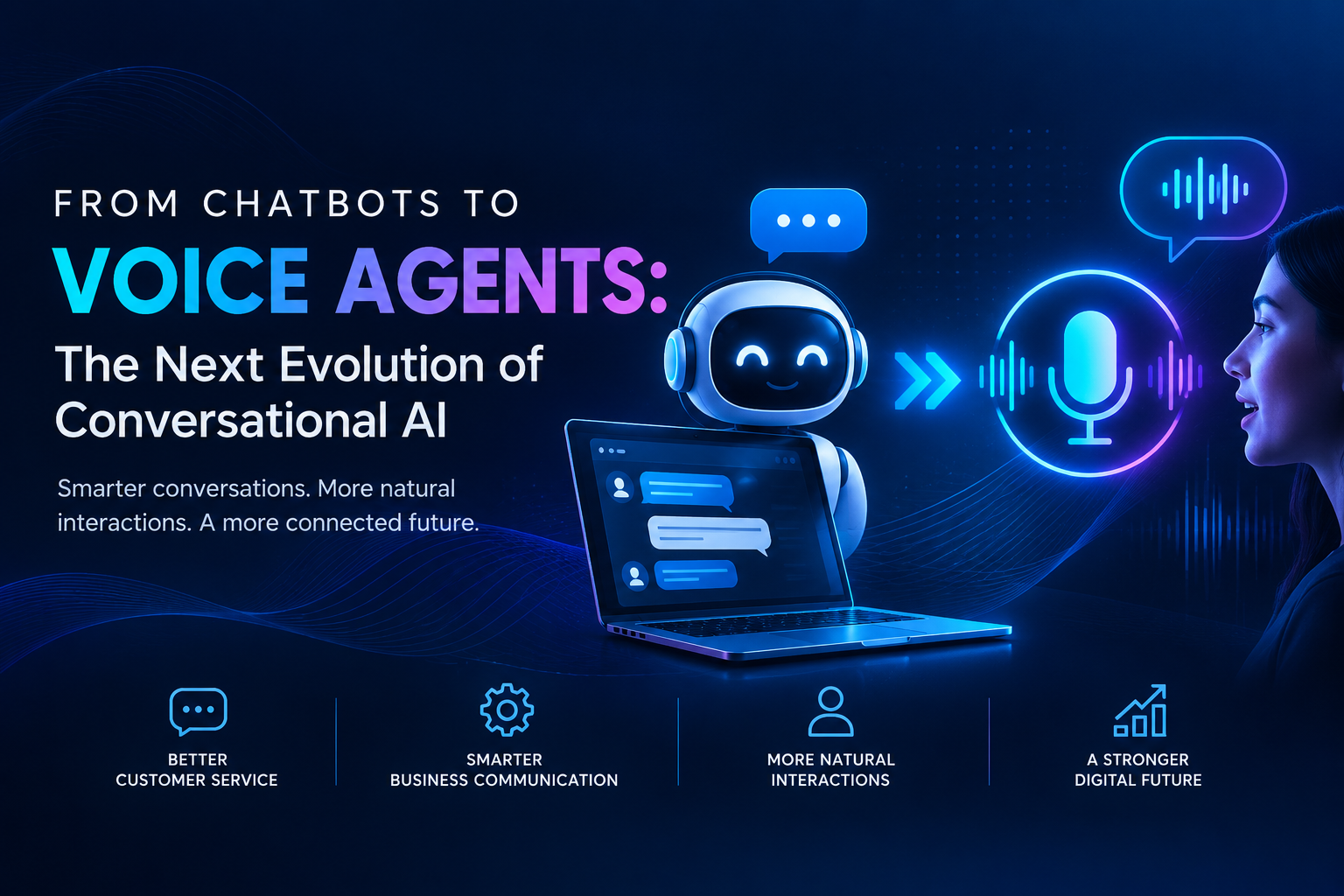
From Chatbots to Voice Agents: The Next Evolution of Conversational AI
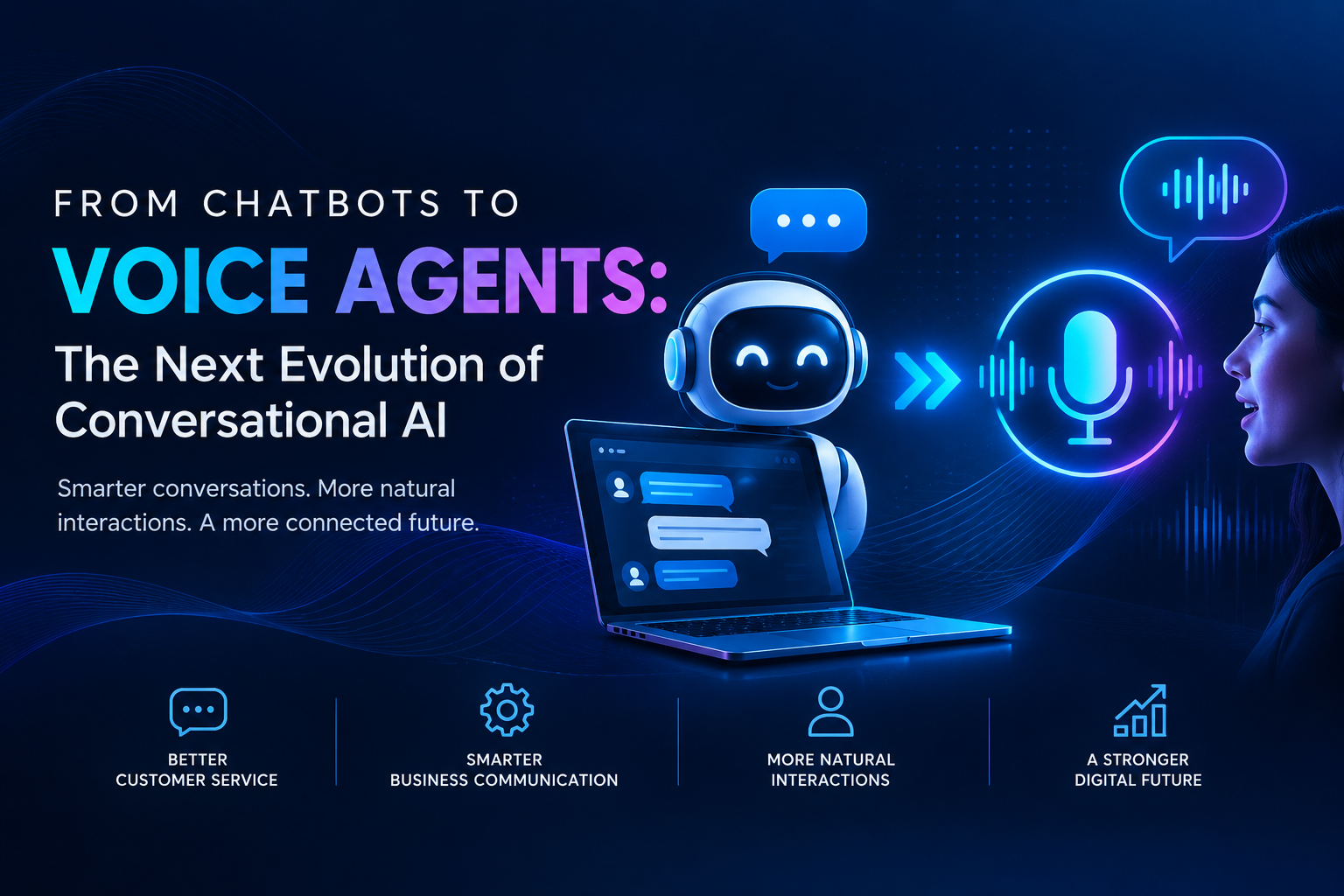
Explore the next evolution of conversational AI as chatbots move toward intelligent voice agents, offering more natural, real-time, and human-like interactions
Ten years back, a chatbot popup felt futuristic. Today it feels basic. Customers want speed. They want answers without typing. That shift is pushing businesses from text bots toward AI voice agents. This piece traces that evolution and what it means for your business.
How Chatbots Started the Conversational AI Wave
Chatbots began as scripted, rule-based tools. Type a keyword, get a canned reply. Nothing more. Over time, natural language processing has improved. Bots got smarter. Generative AI then changed the game further. Chatbots could understand intent, not just keywords. They handled FAQs, order tracking, basic support tickets. Text bots became standard on most business websites, and for good reason. They're cheap to deploy and handle repetitive queries well.
TL;DR: Chatbots evolved from scripted replies to intent-aware assistants and became a default on most business websites.
Why Text Bots Hit a Ceiling
Text has limits. Typing is slow. Screens aren't always available. Many customers still call when things get urgent or complex. That preference isn't about disliking AI. It's about trust and speed on calls. Voice carries tone, urgency, and emotion. Text often misses that. A frustrated customer typing "this isn't working" reads very differently from hearing it in their voice. Businesses realized chat alone couldn't cover the full customer journey. Phone support still handles the moments that matter most: emergencies, complaints, high-value sales calls. This gap opened the door for something built specifically for voice.
TL;DR: Text bots solve simple queries well, but calls remain the channel customers trust for urgent or emotional issues.
The Rise of AI Voice Agents
AI voice agents took the same intelligence behind chatbots and moved it to calls. They listen, understand context, and respond in natural speech. No rigid menus. No "press 1 for sales." Modern AI voice agents handle multi-step conversations, not just single questions.
They can qualify for a lead, book an appointment, or resolve a billing query, all in one call. This isn't a distant idea anymore. Contact centers already run pilots and full deployments today.
The shift mirrors what happened with chatbots a decade ago, just faster and on a harder channel. Voice is harder to get right. Latency, accents, background noise all add complexity. That's exactly why solving it well matters so much.
TL;DR: AI voice agents extend conversational AI onto phone calls, handling complex, multi-step tasks in natural speech.
What Makes Voicebot Solutions Different
Not every voice tool qualifies as a true voicebot solution. Basic IVR just routes calls with fixed menus. It doesn't understand you. Real voicebot solutions use speech recognition, natural language understanding, and dynamic response generation together. They pull data from your CRM or helpdesk mid-call.
They detect frustration in a caller's tone and adjust their pace. Some can even switch languages mid-conversation for global support teams. This is why businesses moving from chatbots to voicebot solutions see faster resolution, not just automation. The technology understands context across a full call, not just one query.
Voicebot Solutions — AI-driven systems that handle phone conversations using speech recognition and natural language understanding, without rigid menu trees.
TL;DR: Voicebot solutions combine speech AI with live data access, going far beyond basic IVR routing.
Real Business Use Cases for AI Voice Agents
Customer support is obvious. AI voice agents answer common queries around the clock. No hold music. No queue. Sales teams use them for outbound follow-up too, calling back leads who went cold. Healthcare clinics use voice agents for appointment booking and reminders.
Banks are testing them for balance checks and fraud alerts. Even small businesses, like a local plumbing firm, use voicebot solutions to stop missing calls after hours. A missed call for a service business often means a lost customer, not just a lost query. Across sectors, the pattern repeats: calls get answered, staff get freed up for harder work.
TL;DR: AI voice agents now cover support, sales outreach, appointment booking, and after-hours call coverage across industries.
Common Mistakes When Adopting Voicebot Solutions
Many businesses jump in without a clear use case first. That leads to a voice agent trying to do everything and doing none of it well. Start narrow. Pick one high-volume, repetitive call type and automate that first. Another mistake: ignoring the handoff to humans.
A good voicebot solution knows when to escalate, not just when to answer. Poor escalation frustrates customers faster than any bad chatbot ever did. Skipping voice tuning is another trap. Accents, tone, and pacing all need testing before go-live. Treat your voice agent like a new hire. Train it, test it, then scale it.
TL;DR: Successful adoption starts narrow, builds clear escalation paths, and tests voice quality before scaling up.
What's Next for Conversational AI
The line between chatbots and AI voice agents is fading. Expect more unified platforms that handle both voice and text from one system. Real-time translation on calls is also coming, letting teams serve callers in languages they don't staff for. Traditional IVR menus are likely to fade out in most developed markets over time.
Emotional intelligence in voice AI is improving too, helping agents catch frustration early and respond better. Businesses that adopt voicebot solutions now build a head start. Those waiting for the "perfect" moment risk falling behind competitors already live.
TL;DR: Voice and text AI are converging fast, and early adopters of voicebot solutions gain a real competitive edge.
Conclusion
Conversational AI has moved from scripted chat windows to intelligent voice conversations. Chatbots solved simple, low-stakes queries well. AI voice agents now handle the complex, urgent, high-value conversations businesses can't afford to miss. Three things matter going forward.
First, voice and text AI will keep converging into one system. Second, voicebot solutions deliver real gains today, not just in theory, when adopted with a clear use case. Third, early movers are already building the operational edge over competitors stuck on legacy IVR. The question for most businesses isn't whether to adopt AI voice agents. It's how soon.